Research and problem discovery · Developing
Find the language, audience and problems around which useful digital properties could be built. End-to-end acquisition learning is not verified.
Capability map
Capabilities are organized by the business task rather than by internal tool names. Statuses refer to specific evidence: a live reader experience, a bounded test, implemented code, or a future direction.
Research, strategy, creative
Find the language, audience and problems around which useful digital properties could be built. End-to-end acquisition learning is not verified.
Map problem → audience → message → journey → offer → channel → outcome, preserving human judgment.
Produce and revise editorial content, image assets and documents under site policies; inspect published guides and examples.
Create, validate, edit, export and release governed pages and content. The public tenant is a working example.
The functional chain
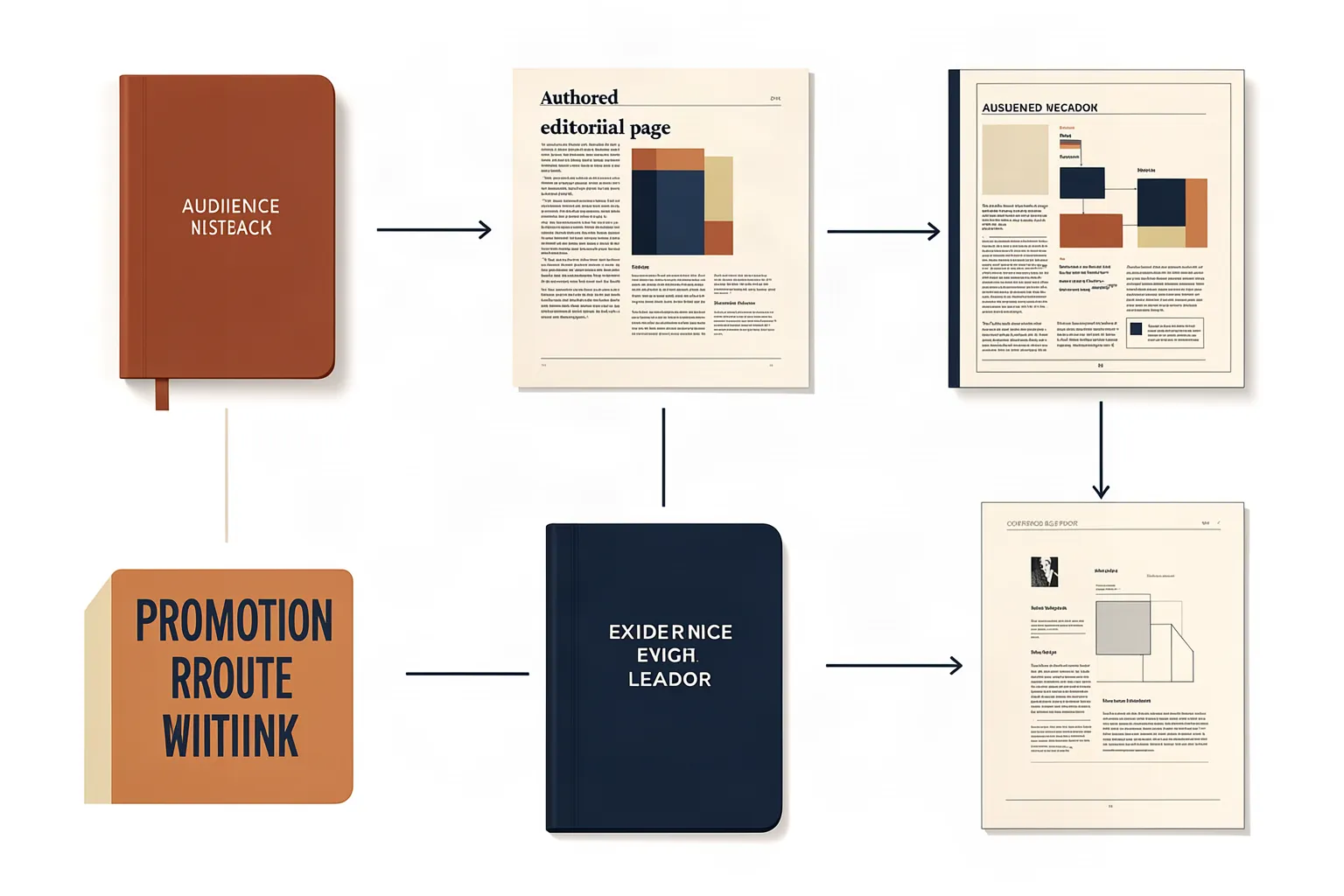
Evidence boundary: A visible webpage or an image job proves a particular output can be produced. It does not prove traffic acquisition, customer demand or commercial effectiveness.
Promotion, conversion, measurement
Campaign runners and channel integration are a strategic direction. Autonomous paid acquisition is not claimed live.
Form definitions and landing and offer-page building blocks exist; end-to-end sales and delivery remain to be verified.
Tracking configuration and experimental structures exist. Cross-channel attribution and measured profitability are not established.
Use observed behavior to maintain a perishable Knowledge Property. Measurable commercial learning is a future proof point.
How labels work: Verified live means a specific outcome was observed on a deployed service. Tested means a named controlled case passed. Built but not proven live means implementation exists without the required production result. Planned is an intent. Illustrative is a sample, not production evidence. Unverified means more information is needed.
Specialized agents can operate within supported tools and permissions. There is no blanket claim of independent end-to-end operation.
Object contracts, revisions, leases, validation, approval and separate publication and deployment controls can be inspected.